↗ Building a Human-in-the-Loop Security Program That Actually Scales
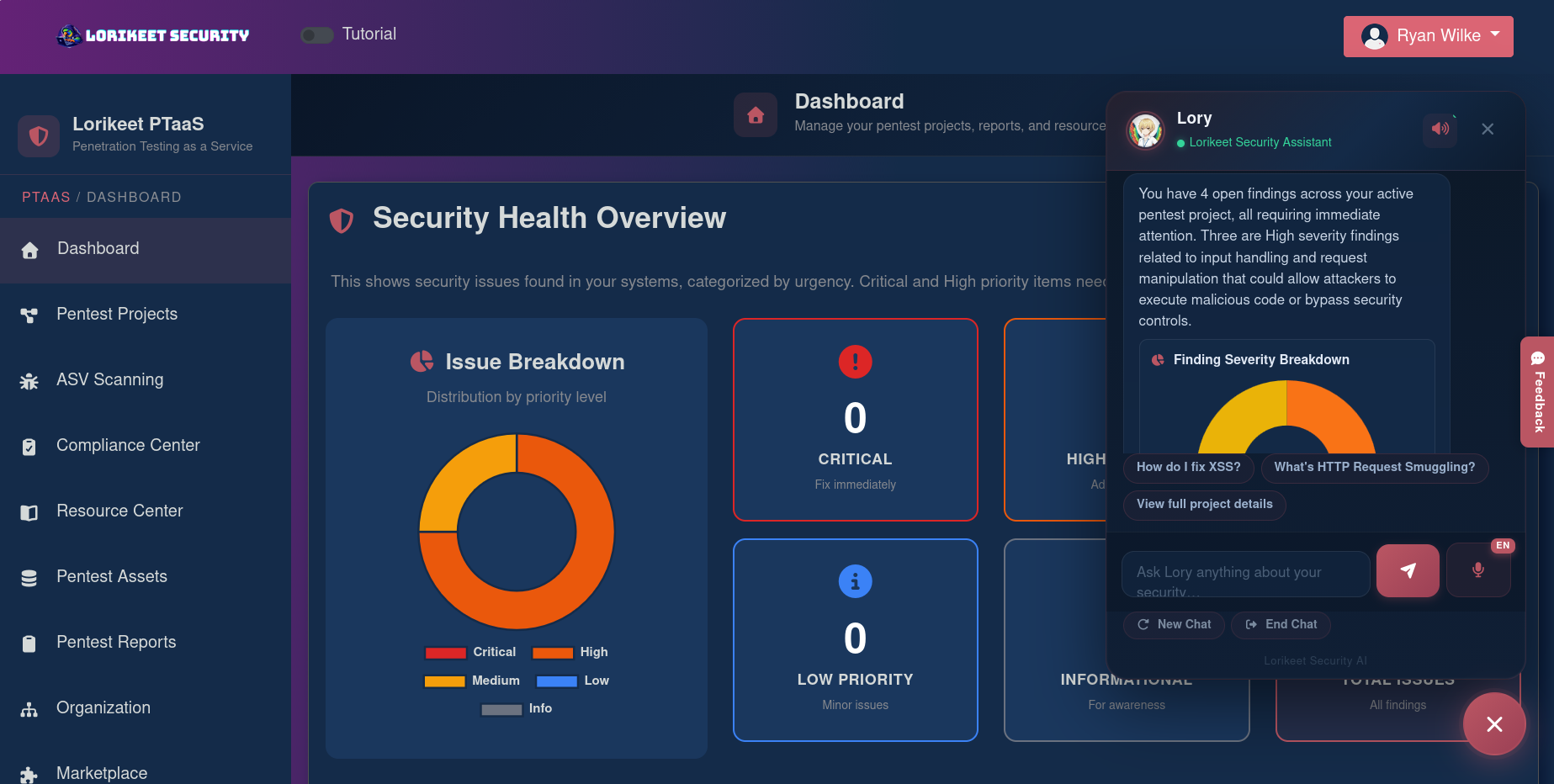
In the next 5 minutes, you’ll see whether Lorikeet Security belongs at the center of your security program—and what it takes to implement it well. From what I’ve seen over 15 years in offensive security and founder trenches, Lorikeet’s differentiator is the platform layer: a real-time portal that fuses manual penetration testing across your full stack with continuous attack surface monitoring, compliance automation, and security awareness training. Under the hood, the design philosophy is human-first with AI assist: all findings are generated by experienced researchers, then operationalized via Lory, an AI assistant trained on ~2,000 vulnerability entries to accelerate triage and remediation. It’s not a PDF shop—it’s a living system that converts tests into programmatic improvements.
↗ Architecture & Design Principles
Lorikeet follows a multi-tenant, service-plus-platform model. Think of it as three planes stitched by a shared data model:
- →Assessment plane: 100% manual pentesting by researchers across applications (web, mobile, APIs, desktop/thick clients, AI agents) and infrastructure (cloud, networks, AD, containers/Kubernetes, wireless). Engagement orchestration, test artifacts, and retest verification all flow into the portal.
- →Monitoring plane: 24/7 attack surface monitoring enumerates assets, fingerprints services, and tracks exposure drift over time. This complements—but intentionally doesn’t replace—manual assessment depth.
- →Compliance and enablement plane: Mapped controls across SOC 2, PCI-DSS, ISO 27001, HIPAA, and more, with audit-ready output. Partnerships with Vanta and Drata provide automation bridges; Accorp Partners CPA closes the loop on attestations.
The system scales horizontally on two axes: continuous discovery jobs (asset inventory, exposure deltas) and people capacity for deep-dive manual testing. Lory sits in the middle to compress cycle time from “finding” to “fix,” surfacing remediation steps aligned to developer and auditor contexts.
↗ Feature Breakdown
→ Core Capabilities
- →
Manual-first penetration testing across the full attack surface
- →Technical: Researchers perform end-to-end tests—REST/GraphQL/SOAP APIs, AI agent prompts and tool-use chains, Kubernetes RBAC and control-plane hardening, Active Directory abuse paths, and wireless protocol weaknesses. Findings undergo internal QA to eliminate scanner noise and false positives.
- →Use case: Pre-audit assurance before SOC 2/ISO 27001, pre-IPO security readiness, or validating AI-agent business logic and prompt injection resilience that commodity scanners miss.
- →
Continuous attack surface monitoring (24/7)
- →Technical: Asset discovery and exposure tracking detect net-new subdomains, cloud service exposures, insecure TLS posture, and orphaned services. This surfaces ephemeral risk (e.g., a misconfigured staging S3 bucket or a leaked dev panel) between formal test windows.
- →Use case: Early-stage teams with fast release cycles that can’t wait for quarterly tests to know when a feature flag exposed an admin route.
- →
Compliance automation with audit-ready reporting
- →Technical: Findings and remediation steps map to controls across SOC 2, PCI-DSS, ISO 27001, HIPAA, CMMC, HITRUST, GDPR, FedRAMP, NIS2, DORA, SOX, CCPA/CPRA, GLBA, CIS Controls, and Google CASA/MASA. Vanta MSP Partner and Drata integrations streamline control evidence; Accorp Partners CPA conducts attestations—so you can go from pentest to signed report without tool-hopping.
- →Use case: Seed-to-Series C companies compressing the “get certified” critical path to unlock enterprise sales.
Bonus: Specialized engagements—red teaming, social engineering, physical testing, IoT/hardware, blockchain audits, and “vibe coding” reviews for apps built via Lovable, Claude Code, Cursor—address modern development patterns where AI tooling changes risk posture.
→ Integration Ecosystem
Lorikeet’s strongest connective tissue is on the compliance side: formal partnerships with Vanta and Drata for control automation, and a direct audit handoff with Accorp Partners CPA. In practice, that means findings and remediation artifacts can be aligned to controls without manual spreadsheet wrangling. For managed services, vulnerability and patch management, SOC-as-a-Service, access reviews, and vCISO retainers extend the platform into ongoing ops. While public APIs/webhooks aren’t emphasized, expect exportable, audit-ready reports; if your workflow is ticket-driven, clarify field mappings upfront.
→ Security & Compliance
All engagements produce audit-ready output with step-by-step remediation guidance for developers and auditors, plus free retesting to verify fixes. Manual-only findings dramatically reduce false positives, which matters when auditors ask for exact evidence chains. Enterprise posture is reinforced by compliance breadth and partner-backed attestations; map this to your data handling needs (e.g., evidence retention policies, role-based access, SSO) during security review.
↗ Performance Considerations
This is not inline prevention—performance is about time-to-detection and time-to-remediation. The monitoring plane runs continuously to catch exposure drift; the assessment plane scales by researcher bandwidth and scheduling. Lory reduces remediation latency by turning validated findings into precise developer steps. Free retesting shortens the “fix-verify” loop, which in my experience saves entire sprints compared to legacy PDF workflows.
↗ How It Compares Technically
While Flowtriq excels at real-time, inline DDoS detection and auto-mitigation at L3–L7 to keep servers online, Lorikeet is better suited for proactive discovery and remediation of vulnerabilities across applications, cloud, and internal networks—with compliance outcomes bundled. If uptime under volumetric attack is the problem, Flowtriq is the right edge tool. If your goal is to reduce latent vulnerabilities, pass audits, and mature your program, Lorikeet’s human-in-the-loop platform is the fit. Versus scanner-only tools, Lorikeet’s manual approach kills false-positive churn. Versus bug bounty networks, it provides structured scope control, formal compliance mapping, and guaranteed retests.
↗ Developer Experience
From what I’ve seen, the win is clarity: findings are written for developers and auditors, not just security folks, and retesting is included—so engineers aren’t chasing ghosts. The real-time portal keeps engagement state visible, which is critical for sprint planning. This is a service-led platform, not a developer SDK; if you need deep API access for custom dashboards, confirm availability, but most startups will get value out-of-the-box through reports, remediation steps, and compliance alignment.
↗ Technical Verdict
Strengths: Manual-first testing across a broad surface area, continuous exposure monitoring, compliance automation that actually shortens audit paths, and Lory to collapse remediation time. The single portal avoids the “ten tools, one outcome” problem. Limitations: Not an inline control—pair it with WAF/DDoS layers when needed; scheduling depth work still depends on researcher capacity; public API story isn’t front-and-center. Ideal for startups scaling into enterprise sales, regulated industries, or teams shipping AI-enabled apps and cloud-native stacks who need credible, audit-ready security with fast feedback loops.
Website: https://lorikeetsecurity.com
EXTERNAL VECTOR
VISIT LORIKEET SECURITY ↗